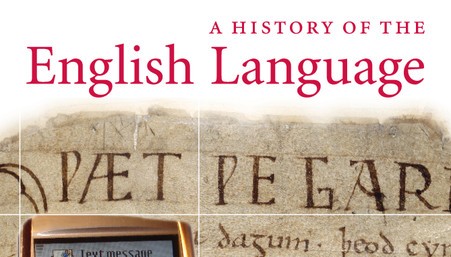
History of the English Language (HISEL)
Course Description
This course traces the historical development of the English language from its Indo-European origins to its contemporary global forms. It examines major linguistic changes in phonology, morphology, syntax, vocabulary, and semantics across different historical periods—Old English, Middle English, Early Modern English, and Modern English. The course also explores the impact of invasions, colonisation, technology, print culture, and globalization on English. Special attention is given to English as a world language and its sociopolitical and cultural implications.
Course Objectives
The course aims to:
1. Provide students with a historical understanding of the evolution of English.
2. Familiarise learners with key linguistic changes across different periods.
3. Examine the influence of social, political, and cultural forces on language change.
4. Introduce the development of standard English and varieties of English.
5. Enable students to critically analyse language change using historical examples.
Learning Outcomes
By the end of the course, students will be able to:
Explain the origins and development of the English language.
Identify major linguistic features of different historical stages of English.
Analyze the impact of historical events on language evolution.
Understand the emergence of Standard English and World Englishes.
Apply historical linguistic concepts to contemporary English usage.
Course Structure and Syllabus
Module 1: Origins of English and the Indo-European Background
* Language families and language change
* Indo-European language family
* Germanic branch of Indo-European
* Characteristics of Proto-Germanic
* Grimm’s Law and Verner’s Law
Module 2: Old English (c. 450–1100)
* Anglo-Saxon settlement and linguistic impact
* Dialects of Old English (West Saxon, Mercian, Northumbrian, Kentish)
* Grammatical structure: inflections, gender, word order
* Vocabulary sources
* Introduction to Old English texts (e.g., Beowulf, The Anglo-Saxon Chronicle)
Module 3: Middle English (c. 1100–1500)
* Norman Conquest and French influence
* Decline of inflectional system
* Expansion of vocabulary: French and Latin borrowings
* Dialectal diversity and regional variation
* Chaucer and the London dialect
Module 4: Early Modern English (c. 1500–1700)
* Renaissance and classical influence
* The Great Vowel Shift
* Standardisation and the role of printing
* Bible translations and Shakespeare’s contribution
* Growth of dictionaries and grammars
Module 5: Modern English (c. 1700–Present)
* Industrial Revolution and scientific vocabulary
* Prescriptive vs descriptive grammar
* Expansion of English through colonialism
* American English and other national varieties
* English in the digital age
Module 6: World Englishes and Contemporary Developments
* English as a global lingua franca
* New Englishes (Indian English, African Englishes, etc.)
* Language, power, and identity
* English and multilingualism
* Future of the English language
Teaching-Learning Methods
Lectures and interactive discussions
Textual analysis and historical documents
Audio-visual materials and language maps
Student presentations and seminars
Assignments and project-based learning
Evaluation Scheme
Component Weightage
Internal Assessment (Assignments/Presentations) 20%
Mid-Semester Examination 20%
Project / Term Paper 20%
End-Semester Examination 40%
Total 100%
Course Readings
Primary Texts
Baugh, Albert C., and Thomas Cable. A History of the English Language. Routledge.
Barber, Charles. The English Language: A Historical Introduction. Cambridge University Press.
Secondary / Reference Texts
Crystal, David. The Stories of English. Penguin.
McCrum, Robert, William Cran, and Robert MacNeil. The Story of English. Penguin.
Singh, Ishtla. The History of English. Hodder Education.
Fennell, Barbara A. A History of English: A Sociolinguistic Approach. Wiley-Blackwell.
COURSE INSTRUCTOR: DR. RUDRASHIS DATTA
CONTACT NO. – (91) – 9433323021
Email – rudrashisdatta@gmail.com
Contact Hours: 9.00 am – 4.00 pm
Course Description
This course traces the historical development of the English language from its Indo-European origins to its contemporary global forms. It examines major linguistic changes in phonology, morphology, syntax, vocabulary, and semantics across different historical periods—Old English, Middle English, Early Modern English, and Modern English. The course also explores the impact of invasions, colonisation, technology, print culture, and globalization on English. Special attention is given to English as a world language and its sociopolitical and cultural implications.
Course Objectives
The course aims to:
1. Provide students with a historical understanding of the evolution of English.
2. Familiarise learners with key linguistic changes across different periods.
3. Examine the influence of social, political, and cultural forces on language change.
4. Introduce the development of standard English and varieties of English.
5. Enable students to critically analyse language change using historical examples.
Learning Outcomes
By the end of the course, students will be able to:
Explain the origins and development of the English language.
Identify major linguistic features of different historical stages of English.
Analyze the impact of historical events on language evolution.
Understand the emergence of Standard English and World Englishes.
Apply historical linguistic concepts to contemporary English usage.
Course Structure and Syllabus
Module 1: Origins of English and the Indo-European Background
* Language families and language change
* Indo-European language family
* Germanic branch of Indo-European
* Characteristics of Proto-Germanic
* Grimm’s Law and Verner’s Law
Module 2: Old English (c. 450–1100)
* Anglo-Saxon settlement and linguistic impact
* Dialects of Old English (West Saxon, Mercian, Northumbrian, Kentish)
* Grammatical structure: inflections, gender, word order
* Vocabulary sources
* Introduction to Old English texts (e.g., Beowulf, The Anglo-Saxon Chronicle)
Module 3: Middle English (c. 1100–1500)
* Norman Conquest and French influence
* Decline of inflectional system
* Expansion of vocabulary: French and Latin borrowings
* Dialectal diversity and regional variation
* Chaucer and the London dialect
Module 4: Early Modern English (c. 1500–1700)
* Renaissance and classical influence
* The Great Vowel Shift
* Standardisation and the role of printing
* Bible translations and Shakespeare’s contribution
* Growth of dictionaries and grammars
Module 5: Modern English (c. 1700–Present)
* Industrial Revolution and scientific vocabulary
* Prescriptive vs descriptive grammar
* Expansion of English through colonialism
* American English and other national varieties
* English in the digital age
Module 6: World Englishes and Contemporary Developments
* English as a global lingua franca
* New Englishes (Indian English, African Englishes, etc.)
* Language, power, and identity
* English and multilingualism
* Future of the English language
Teaching-Learning Methods
Lectures and interactive discussions
Textual analysis and historical documents
Audio-visual materials and language maps
Student presentations and seminars
Assignments and project-based learning
Evaluation Scheme
Component Weightage
Internal Assessment (Assignments/Presentations) 20%
Mid-Semester Examination 20%
Project / Term Paper 20%
End-Semester Examination 40%
Total 100%
Course Readings
Primary Texts
Baugh, Albert C., and Thomas Cable. A History of the English Language. Routledge.
Barber, Charles. The English Language: A Historical Introduction. Cambridge University Press.
Secondary / Reference Texts
Crystal, David. The Stories of English. Penguin.
McCrum, Robert, William Cran, and Robert MacNeil. The Story of English. Penguin.
Singh, Ishtla. The History of English. Hodder Education.
Fennell, Barbara A. A History of English: A Sociolinguistic Approach. Wiley-Blackwell.
COURSE INSTRUCTOR: DR. RUDRASHIS DATTA
CONTACT NO. – (91) – 9433323021
Email – rudrashisdatta@gmail.com
Contact Hours: 9.00 am – 4.00 pm
- Teacher: Dr. Rudrashis Datta